
Your Shop Floor Is Full of Data. Here Is Why It Is Not Helping You Yet.
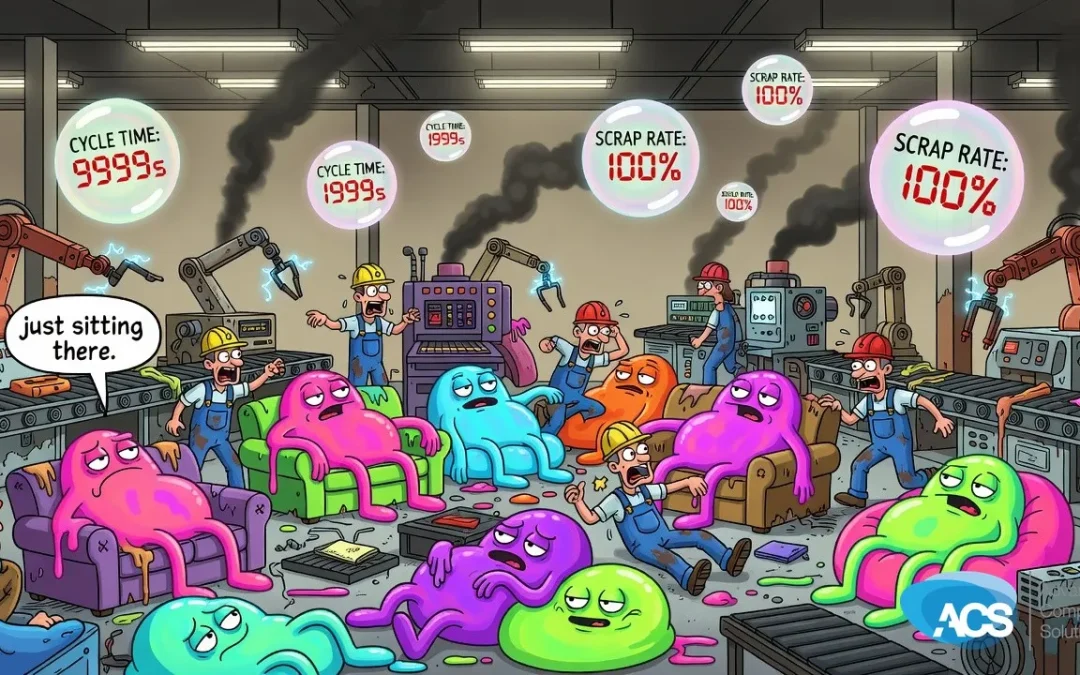
You are already collecting the data. The problem is it is just sitting there.
That is the real issue facing small manufacturers right now — not a shortage of information, but a shortage of tools to connect it, read it, and turn it into something useful on the shop floor.
You Have More Data Than You Think
Machines are logging cycle times. Your team is tracking scrap rates. Orders are moving through your system leaving a trail of timestamps and notes. That is data. Plenty of it. But if it lives in three different places and nobody has time to pull it together, it might as well not exist.
Albert put it plainly on the show: small manufacturers are collecting plenty of floor data but lack the integration tools to do anything with it. And that is the gap. It is not that the information is not there — it is that nothing is connecting the dots.
This is a real cost. When you cannot see what is slowing your line down, you cannot fix it. When your data lives in silos, you are making decisions on gut feel instead of numbers. And gut feel, even experienced gut feel, leaves money on the table.
Why This Gap Exists in the First Place
Most small shops under 100 employees did not build their systems with integration in mind. You bought the machine, you bought the software that came with it, and you moved on. Then you bought another machine with different software. Now you have got four systems that do not talk to each other and a spreadsheet somebody built in 2019 that everyone is afraid to touch.
The integration tools that big manufacturers use have historically been expensive and complicated. Enterprise software built for a plant with 500 employees does not scale down well to a shop with 30. So the data piles up, and nobody has the bandwidth to wrestle it into shape.
But that is changing. And faster than most people realize.
What This Means for Your Business Right Now
The villain here is not bad data — it is idle data. Every week that your floor information sits unanalyzed is a week you are flying blind on efficiency, waste, and capacity. That has a real cost in labor hours, in scrap, in jobs you could have quoted but did not because you were not sure you had the capacity.
And here is the thing Albert pointed out that is worth sitting with: AI is built for exactly this problem. You do not need a massive integration project or a six-figure software rollout. You need to start connecting what you already have and running it through tools that can actually read it. Albert has been doing serious work with AI tools and he is direct about where this is going — an AI agent that can look at your data, spot the pattern, and tell you where the bottleneck is, that is not science fiction anymore. That is this year.
The shop that figures this out first has a real edge. Faster decisions, less waste, better capacity planning. The shop that waits is still running on instinct while the competitor down the road is running on numbers.
What To Do This Week
- List every place your shop data lives. Machines, software, spreadsheets, paper logs — write them all down. You cannot integrate what you have not mapped. This takes an afternoon, not a week.
- Pick one data source and run it through an AI tool. Export a month of cycle time data or scrap logs and drop it into a tool like ChatGPT or Copilot with a simple prompt: Where are the patterns? Where are the outliers? You may be surprised what comes back.
- Ask your IT person or provider what integration options exist between your current systems. Many shops have more connectivity available than they know about — it just was never set up. A quick conversation can tell you what is possible without buying anything new.
- Check whether your regional Manufacturing Extension Partnership (MEP) Center offers data or integration resources. MEP Centers exist in most states and many offer low-cost or no-cost help for exactly this kind of operational improvement project.
Questions about how this affects your setup? Schedule a free IT consultation and we’ll walk through it with you.
Wherever your team is based, ACS provides hands-on managed IT support — see how we help businesses in Central Florida.